
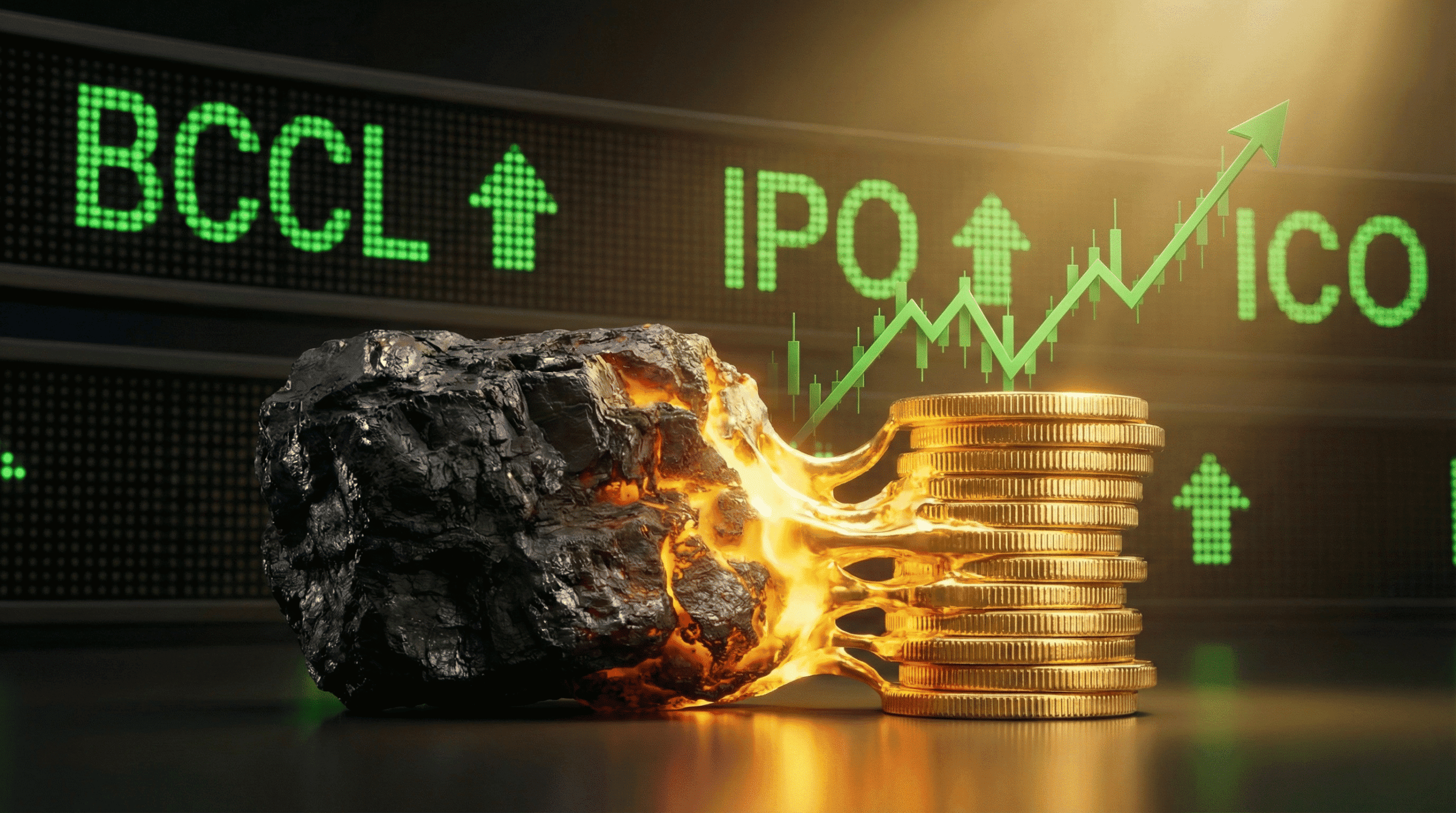
146 times oversubscribed. Let that sink in for a second.
On listing day, the stock popped 96%. If you were on the outside looking in, it looked like a party. But having covered public sector listings for the better part of two decades, I’ve learned to spot the difference between a fundamental shift and a sugar rush. This wasn’t a market waking up to a hidden gem. It was a stampede.
Everyone saw the green arrows. Few looked at the engine room.
When I dug through the Red Herring Prospectus (RHP) instead of just reading the headlines, the glossy narrative started to crack. The numbers are big, sure. But the context? That’s where the devil is. We aren’t looking at a high-growth tech darling here; we are looking at an old-world mining operator with old-world problems.
Here is the reality behind the ticker tape.
1. The “Growth” Capital Myth: A Zero-Sum Game
Most investors assume an IPO means cash for the company. Money to build factories, hire talent, or upgrade tech.
Not here.
This entire raise—nearly ₹1,070 crore—was a 100% Offer for Sale (OFS). That means BCCL didn’t see a single rupee. The cash went straight out the door and into the pockets of Coal India, the parent company.
Why does this matter? Because it tells you exactly what the promoter thinks. If Coal India believed BCCL was on the cusp of an explosive growth phase requiring capital, they would have issued fresh equity. They didn’t. They cashed out. In my experience, when the insider takes chips off the table while the public is fighting to pile them on, you need to pause. You aren’t funding a business expansion; you’re just providing an exit liquidity event.
2. The Import Paradox: Dirt vs. Quality
BCCL is the big dog in India. They dug up 58.5% of our domestic coking coal in FY25. They are the only game in town with prime reserves.
So why are we still importing 90% of what we need?
It’s not just about volume. It’s about dirt. Indian coking coal is notoriously high in ash content. It’s gritty, difficult stuff that needs aggressive washing before it can touch a blast furnace. I’ve visited washeries where the challenge isn’t just mining the rock; it’s cleaning it enough to make it usable.
The steel industry—the actual customer—often finds it easier (and cleaner) to ship high-grade coal from Australia than to wrestle with the domestic supply chain. That gap between “national champion” and “actual utility” is massive. It’s a structural flaw, not a temporary blip.
3. Profit is Vanity, Cash is Sanity
On paper, the turnaround looks brilliant. A record ₹1,564 crore profit in FY24. Dividends paid. The balance sheet looks healed.
But look closer at the receivables.
The time it takes BCCL to actually get paid has ballooned. We went from 25 days in FY24 to 60 days by September 2025. That is a terrifying trend line.
I saw the impact immediately in the cash flow statements. Operating cash flow cratered from over ₹1,000 crore to just ₹334.9 crore in the first half of FY26. Why? Because their customers—mostly other government entities—are sitting on the invoices. This is the classic PSU trap. You can report all the profit you want, but if the cash is stuck in bureaucratic limbo, your operations starve. It felt less like a business and more like a waiting game.
4. Fragility in the System: The Silo Collapse
We like to think of mining giants as unshakeable monoliths. They aren’t. They are industrial operations subject to physics and weather.
Case in point: September 2025. A silo at the Madhuband washery didn’t just malfunction; it collapsed.
Boom. Half the washing capacity gone in an instant.
Management says reconstruction will take two years. Two years. That isn’t a minor hiccup; that is a multi-year drag on revenue. Add to that the production dips from “excessive rainfall” in FY25, and you see the picture. This isn’t software where you can patch a bug in an afternoon. When things break here, they stay broken for a long time. The operational risk is visceral, heavy, and expensive.
5. The Valuation Disconnect
The market treated this IPO like a tech unicorn. But this is a dividend yield play. Nothing more.
Analysts I trust kept using words like “stability” and “yield.” The market heard “moonshot.”
There is a dangerous mismatch between expectation and reality. If you bought in at a 96% premium expecting BCCL to double its output next year, you bought the wrong stock. This is a mature, cyclical asset. It pays you to wait, but it won’t make you rich overnight. The euphoria was purely momentum-driven, untethered from the boring, gritty truth of coal mining economics.
The Bottom Line
BCCL is a solid, strategic asset for India. No doubt. But as an investment at these valuations? It’s shaky.
The market chased the headline and ignored the footnotes. We have a company that kept none of the IPO money, struggles to collect cash from customers, and is currently rebuilding a collapsed washery.
Does that sound like a 146x subscription story to you?