
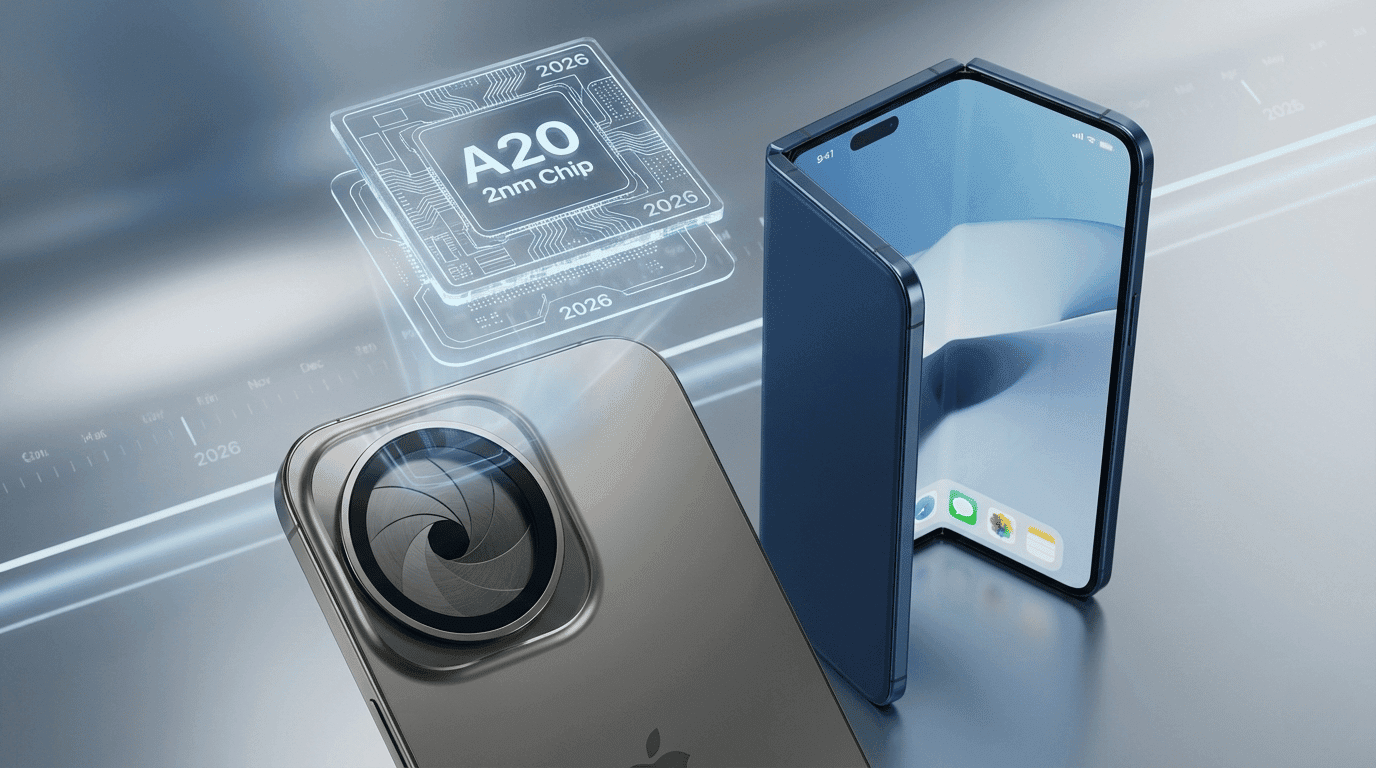
Stop watching the launch events. Seriously, turn them off.
If you’ve been following the tech industry as long as I have, you start to notice a pattern: the things they scream about on stage are rarely the things that change our lives. The real shifts—the ones that mess with our wallets, our habits, and our privacy—happen quietly. They happen in supply chain spreadsheets and obscure component orders.
I’ve spent the last week digging through supplier reports and analyst notes, and what I found isn’t just “news.” It’s a warning. The ground is moving under our feet, and most of us are too busy looking at new bezel sizes to notice.
Here are five changes coming down the pipe that you won’t see on a billboard.
1. Apple is Breaking Up With You (Sort Of)
I still remember the rush of September. For a decade, it was clockwork: new iPhones drop, lines form, and everyone—rich, poor, pro, or casual—gets invited to the party at the same time.
That party is ending.
If the latest supply chain whispers are right, Apple is about to shatter its oldest tradition. Come September 2026, we might only see the high-end iPhone 18 Pro and Pro Max. The standard model? Pushed to the spring of 2027.
This isn’t just a calendar tweak. It’s a velvet rope.
By splitting the launch, Apple is effectively telling us that “new” is now a luxury feature. I’ve seen this strategy before in the fashion world, and it’s brutal but smart. It forces a choice: pay the “Pro” tax to be relevant in the fall, or wait six months to buy what effectively feels like last year’s tech.
But there’s a silver lining here, albeit a cynical one. The trickle-down effect might actually speed up. If the standard model launches six months later, it can’t just be a leftovers bin; it has to compete with fresh Android flagships. We might finally stop seeing 60Hz screens on $800 phones. One can hope.
2. Your Car is Having an Identity Crisis
I sat in a new “software-defined vehicle” last month. It didn’t feel like a machine. It felt like a rolling subscription service.
While everyone argues about EV range, the real revolution is happening deep in the wiring. It’s called “Zonal Architecture,” and it’s arguably the biggest shift since the internal combustion engine.
Old cars were a mess of distinct wires—one for the windows, one for the radio, one for the brakes. New cars are becoming centralized servers. We are moving from $500 worth of chips in a car to over $5,000 for autonomous-ready vehicles.
Why does this matter to you? Because it changes ownership.
When your car is a computer, it can be patched. But it can also be “bricked” or feature-locked. I’m already seeing manufacturers put heated seats behind software paywalls. This semiconductor boom isn’t just making cars smarter; it’s turning your driveway into another monthly bill. The days of fixing your own ride with a wrench? They’re gone. You’ll need a soldering iron and a root kit.
3. The iPhone Fold: A Step Backward?
After years of waiting, the “iPhone Fold” rumors are finally solidifying for late 2026. But there’s a detail in the reports that stopped me cold.
Touch ID.
Apparently, Apple might ditch Face ID for a fingerprint scanner on the side. My first reaction? You have to be kidding me. We spent years training ourselves to look at our phones to unlock them, and now, for their most futuristic device, we’re going back to 2015?
But then I thought about it.
Picture this: You’re at a cafe. Your foldable is open flat on the table. To check a notification with Face ID, you’d have to awkwardly hover your head over it like you’re bobbing for apples. It’s a usability nightmare. A side-mounted fingerprint sensor, while “old” tech, is actually the only ergonomic choice.
It’s a perfect example of how “innovation” sometimes means admitting the old way was better. It’s clunky, sure. But it works. And frankly, I’d take a reliable button over a camera that fails every time I’m wearing sunglasses.
4. The AI Power Bill is Coming Due
We need to stop using the word “Cloud.” It’s too fluffy. It sounds like magic.
The reality is heavy, hot, and loud.
The AI boom is triggering a hardware gold rush that is absolutely terrifying if you look at the energy charts. We aren’t just buying chips; we are building infrastructure that eats electricity like a small nation. Projections from Goldman Sachs suggest data center power consumption could double by 2030.
Think about that.
We are stressing our power grids to the breaking point so we can generate funny images of cats in spacesuits. I’m not anti-AI—I use it daily—but the physical cost is being glossed over. We are entering an era where “compute” is a finite resource, constrained not by silicon, but by how many megawatts we can pull from the wall without melting the wires.
5. The Brain in Your Pocket
For the last ten years, I’ve watched phone makers scream about megapixels. “100x Zoom!” “Night Mode!”
Boring.
The next war won’t be fought over cameras. It’ll be fought over NPUs (Neural Processing Units). The market for these chips is set to explode from $10 billion to $43 billion.
Why? Because the cloud is too slow.
I tried a live-translation feature on a device with a dedicated NPU recently. It was instantaneous. No lag, no “sending to server” spinning wheel. It was just… there. That’s the shift. Your phone isn’t just a window to the internet anymore; it’s becoming a standalone brain.
This is cool, but it’s also isolating. As these devices get smarter, they get hungrier for our personal data to feed that local brain. The privacy implications are a minefield that we haven’t even begun to map out.
The Bottom Line
The gadgets are just the wrapper. The real story is that our relationship with technology is getting more expensive, more restricted, and more physically demanding.
We’re moving from a world where we owned our tools to a world where we rent access to intelligence. It’s exciting, sure. But let’s not pretend it’s all for our benefit.
So, knowing that your next car might need a firmware update and your next phone might force you into a “Pro” tier just to stay current—are you ready to pay the price? Or are you, like me, thinking about holding onto that “dumb” tech just a little bit longer?
HumIndian Secure Verification
Establishing secure connection to the official server…
⏳ Please Wait: … seconds