
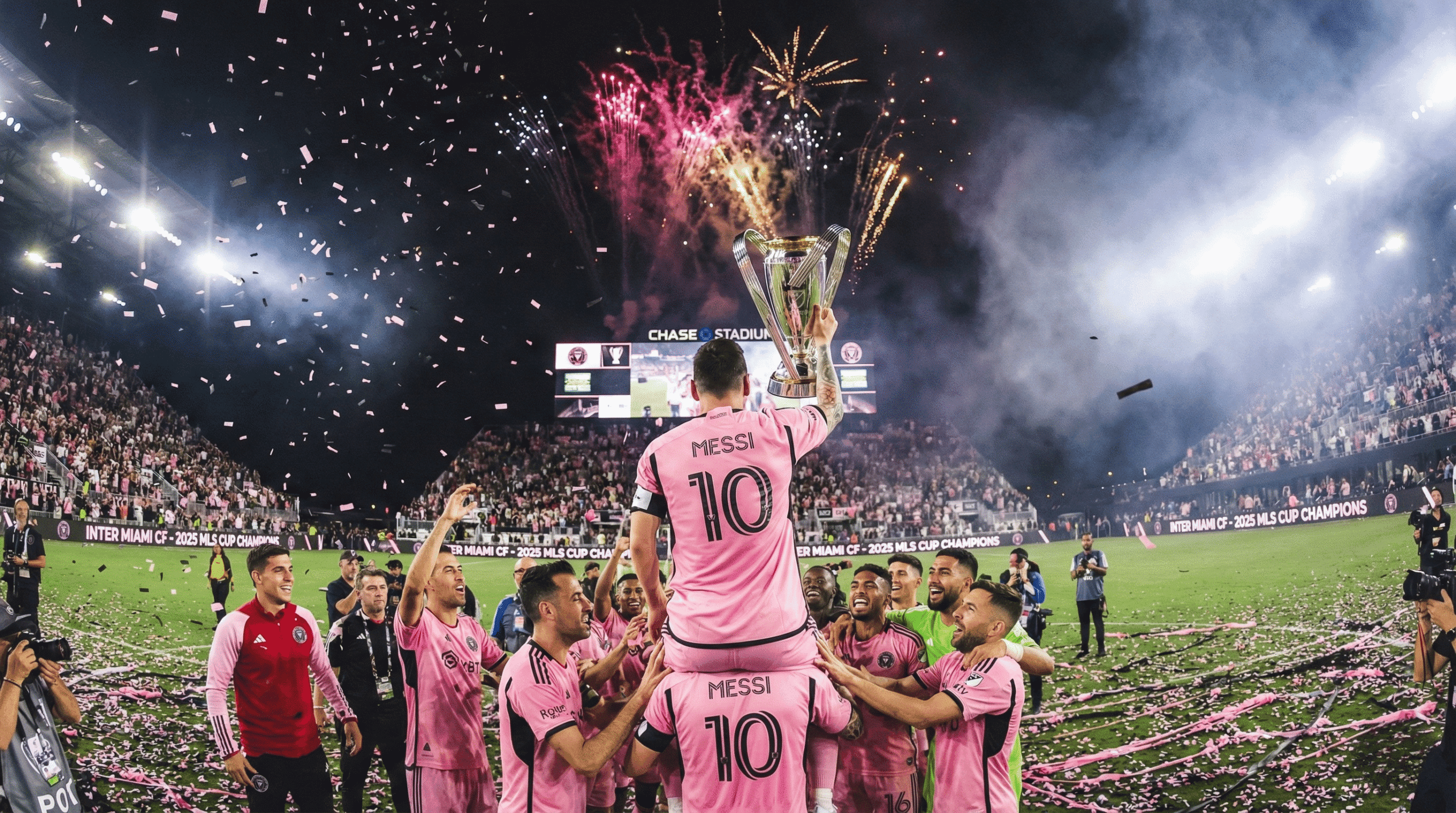
I remember the first time I saw the mockups for the Inter Miami kit. I laughed.
Actually, “laughed” is too polite. I thought it was a joke. In a league desperate for credibility, here was a team launching with a color palette that looked less like a football club and more like a Grand Theft Auto: Vice City loading screen.
I was wrong. Dead wrong.
While the rest of us were obsessing over salary caps and designated players, the Miami ownership group wasn’t building a soccer team. They were building a fashion house that happened to play 90 minutes on weekends. The arrival of Lionel Messi wasn’t the start of the story; it was just the gasoline poured on a fire that had been smoldering for years.
Forget the press releases. Here is what is actually happening in South Florida, stripped of the corporate gloss.
1. It’s Not a Club. It’s a Streetwear Drop.
Most sports franchises try to sell you “history.” Miami didn’t have any. So, they flipped the script. They sold a vibe.
From day one, the strategy felt more like a Supreme or Kith drop than an MLS expansion. That specific shade of pink? It wasn’t an aesthetic choice; it was a scroll-stopper. I’ve scrolled past hundreds of red and blue jerseys on Instagram without blinking. But that pink? It hits your retina like a neon sign in a dark alley.
It was a gamble.
Traditionalists—myself included—hated it. But the data shows we’re dinosaurs. Miami captured a “digitally native” audience that cares more about how the jersey looks in a TikTok fit check than who is actually wearing it on the pitch. They built an emotional hook without winning a single thing.
They sold the shirt before they sold the sport.
2. The Valuation is “Math-Breaking”
Let’s look at the books. Or at least, what we can see of them.
If you looked at Inter Miami’s financials in 2022, they were a standard, mid-tier MLS operation pulling in $50-60 million. Decent. Respectable.
Two years later? They are projecting over $200 million.
That is not “growth.” That is an explosion. To put that insanity into perspective: Inter Miami is now valued in the same ballpark as Inter Milan. Think about that. Inter Milan has a century of European pedigree, Champions League trophies, and generations of die-hard fans. Miami has existed for about five minutes.
It took the Italians 100 years to build that equity. It took Miami two years and one Argentine wizard. It defies every rule of sports economics I’ve ever studied.
3. They Are Winning, But It’s a House of Cards
Here is where I have to take off the “business analyst” hat and put on the “football critic” hat.
If you just look at the Supporters’ Shield, Miami looks dominant. But if you dig into the underlying metrics, the picture gets ugly. Fast.
I spent some time looking at their Expected Points (xP)—the metric that tells you what should have happened based on the quality of chances. Based on the math, Miami’s performance was worthy of 43.3 points.
They actually banked 74.
That gap is terrifying. It means they aren’t winning because of a system; they are winning because they have aliens on the pitch who score goals that shouldn’t physically be possible. It’s statistical fragility masked by individual brilliance. When I watch them, I don’t see a juggernaut. I see a paper-mache defense being held together by the greatest player of all time.
It works until it doesn’t.
4. The “Messi Tax” is Gouging the Locals
Lionel Messi isn’t just lifting Inter Miami; he’s a one-man stimulus package for the entire league.
I saw the reports from Kansas City—they moved the game to Arrowhead Stadium just to fit everyone in. That’s great for the league’s bottom line. But there is a dark side to this circus.
The locals are getting priced out.
I’ve spoken to Season Ticket Holders who have supported this team since the bad old days. They are furious. We’re seeing parking prices hit $50. Ticket renewals are doubling. It’s classic gentrification, applied to a stadium. The ‘Pink Print’ relies on a global audience willing to pay premium prices for a once-in-a-lifetime show, but it risks alienating the bedrock fans who will still be there when Messi retires.
You can fleece the tourists for a while. But eventually, you need the locals.
5. The “Post-Messi” Panic Button? They Aren’t Hitting It.
The biggest criticism I hear is that Miami is a short-term project. A “retirement home” narrative.
I don’t buy it.
If they were just cashing in, they wouldn’t be dumping a billion dollars—yes, with a ‘B’—into the Miami Freedom Park. I’ve looked at the plans. It’s not just a stadium; it’s a 58-acre city-within-a-city. Retail, hotels, the works. It’s a literal concrete anchor designed to keep the franchise relevant long after the stars hang up their boots.
And then there’s the kids.
While everyone is watching number 10, the academy is quietly churning out legitimate talent. Benjamin Cremaschi and David Ruiz aren’t just marketing props; they are playing real minutes. That’s the fail-safe. If the brand cools off, the infrastructure remains.
So, is this a revolution or a bubble?
Honestly, it’s probably both. But for now, it’s the only show in town worth watching.